


Stocks To Buy Now Blog

Stocks on Radar

Starco Brands, Inc. (STCB) Featured in Forbes as its Whipshots Brand Rises from Strength to Strength

  • Starco Brands, Inc.’s Whipshots has rapidly emerged as one of the fastest-growing spirits in history
  • The alcoholic beverage, launched in collaboration with Cardi B and recently highlighted by Forbes Magazine, has just launched its new summer campaign, entitled “Summer of Whipshots”
  • Featuring Cardi B in a 30-second video and showcasing the product used in a number of summer drinks, the campaign has already racked up millions of views and ‘likes’ online

Starco Brands (OTCQB: STCB) has long made it its unwavering mission to create “consumer products with behavior-changing technologies that spark excitement in the everyday.” A modern-day “invention factory” focused around inventing or acquiring novel products and subsequently advancing them using behavior-changing technologies, has recently hit upon yet another breakthrough product offering through Whipshots®, a unique vodka-infused line of whipped cream products used in cocktails, currently making waves throughout the global beverage market.

Figures from Statista have recently forecast the global market size of the alcoholic beverage market to surpass $2.2 trillion by 2025, driven by increasingly discerning customer tastes and preferences. In a bid to differentiate their products from one another, brands have increasingly turned towards celebrities.

Starco Brands, Inc. has partnered with global artist and icon Cardi B to launch their non-dairy, shelf-stable “party in a can” which has a 10% ABV and comes in vanilla, caramel, mocha, and limited-edition lime flavors. The product, which was recently highlighted by Forbes and has been described by Cardi B as “over the top, sexy and unique – kind of like me,” witnessed its initial run of 500 cans sell out within the first five minutes on its launch day. Since then, the product has continued to scale new heights, achieving its first million-can sales after ten months and selling another million cans a mere four months later, making it one of the fastest-growing spirits in history.

Nonetheless, the beverage’s accolades have not just come on the commercial front. Whipshots has rapidly gained widespread industry recognition, recently picking up the “Best of Class Platinum,” “Consumers’ Choice Award” and “Innovation Award” in the 2023 SIP Awards, the “Rising Star” award at the Beverage Dynamics’ 2023 Growth Brands Awards as well as four medals at the 2023 DB&SB Spring Blind Tasting segment of the Global Spirits Masters Competition.

Starco Brands are now embarking on their latest promotional effort, entitled the “Summer of Whipshots” and headlined by the launch of the newest flavor within their beverage line – Lime Whipshots. Currently available in retail stores, Lime Whipshots dropped online on June 14 as part of the brand’s “Whip It, Beaches” campaign. The campaign features Cardi B in a 30-second video and series of images showcasing the product’s use in various summer drinks, including mojitos, margaritas, and daiquiris; having already generated significant buzz amongst Cardi’s 164 million followers, the product’s initial pre-launch post has already garnered nearly 2 million likes.

“We are thrilled to dive headfirst into the ‘Summer of Whipshots’ with Lime as the latest flavor in our Whipshots family,” says Ross Sklar, CEO of Starco Brands, Inc. “Having recently surpassed two million cans sold, Whipshots continues to offer consumers a fun and innovative way to celebrate all year.”

For more information, visit the company’s website at www.StarcoBrands.com.

NOTE TO INVESTORS: The latest news and updates relating to STCB are available in the company’s newsroom at https://ibn.fm/STCB

Lexaria Bioscience Corp. (NASDAQ: LEXX) Grows Robust Intellectual Property Portfolio to 34 Worldwide Patents with Receipt of 4 New Granted in Canada, US

  • Lexaria Bioscience recently received four new patents granted in Canada and the United States
  • In the U.S., the company received two new hypertension-related patents expected to be of particular importance as the company pursues FDA approval for a Phase 1b study evaluating DehydraTECH(TM)-processed CBD
  • So far, the company has a robust intellectual property portfolio comprising 34 patents granted worldwide
  • The strong portfolio gives the company the necessary impetus and peace of mind to pursue multiple large markets, starting with the multi-billion dollar cardiovascular drugs market
  • The company has conducted five human clinical studies that have provided insights into the potential of DehydraTECH-CBD to reduce blood pressure

Lexaria Bioscience’s (NASDAQ: LEXX) intellectual property (“IP”) rests on a strong foundation of granted patents worldwide, a foundation that was recently strengthened by new patents granted in North America. The company, which is developing its patented DehydraTECH(TM) technology platform with the intention of availing it to the masses as an additional step in the manufacturing or processing of active pharmaceutical ingredients (“APIs”) with better bioavailability and bioabsorption properties, celebrated the receipt of four new patents granted in Canada and the United States (https://ibn.fm/rLalk).

In Canada, the company has been granted two new patents, the first for Patent Family #1: Food and Beverage Compositions Infused with Lipophilic Active Agents and Methods of Use Thereof. According to the company, this is the first patent for this Patent Family issued in Canada, but the 18th patent in this family worldwide. The second patent granted falls under the company’s Patent Family #8: Compositions Infused with Nicotine Compounds and Methods of Use Thereof and is the company’s second patent in this Patent Family, following a similar issuance in Australia.

Across the border in the United States, Lexaria received two new hypertension-related patents, both under its Patent Family #21. The first covers Pharmaceutical Compositions and Methods for Treating Hypertension, while the second is for non-pharmaceutical Compositions and Methods for Treating Hypertension. The company expects these two patents to reinforce its commercial opportunities in both pharmaceutical and consumer markets.

The two new hypertension-related patents come at a time when the company is looking to file its Investigational New Drug (“IND”) application seeking approval from the Food and Drug Administration (“FDA”) to commence the formal and registered study HYPER-H23-1, a Phase 1b evaluation of DehydraTECH-CBD for hypertension, later this year. In fact, Lexaria believes these patents “could be of particular importance related to the company’s pursuit of utilizing DehydraTECH-CBD in relation to our expected upcoming FDA IND application.”

Once approved, the FDA-registered IND program will build on positive data from five hypertension-focused human clinical trials, which evidenced lower blood pressure among participants who received DehydraTECH-processed CBD.

The company’s first human study of 2021, HYPER-H21-1, evidenced a reduction in BP across both male and female volunteers, with the drop most pronounced within the first 10-50 minutes after dosing (https://ibn.fm/JGo0S). HYPER-H21-2, a 16-person study, evidenced up to a 23% average drop in overnight blood pressure and reduced arterial stiffness (https://ibn.fm/DmWci), while HYPER-H21-3, also a 16-person study, showed that DehydraTECH-CBD’s use reduced pulmonary artery systolic pressure by about 5 mmHg or 41% overall among male participants (https://ibn.fm/iytZA).

The company then conducted the HYPER-H21-4 study, its most comprehensive study yet, involving 66 participants. This fifth study evidenced the exceptional safety and tolerability profile of DehydraTECH-CBD, with the formulation resulting in a statistically significant lowering of 24-hour ambulatory blood pressure. The company also observed that the formulation lowered patients’ BP throughout the entire study duration (5 weeks) and that it was effective at lowering the BP among patients who were taking other antihypertensive drugs as well as those who were not taking any such drugs (https://ibn.fm/nimwa). The company has also released additional findings from this study, adding to its list of successes announced in 2023.

So far, on the IP front, for example, the company has received seven new granted patents in the current financial year (2023), which commenced September 1, 2022, six of which have been awarded in calendar 2023. As a result, Lexaria now holds 34 granted patents worldwide. The company has achieved considerable intellectual property protection through this existing patent portfolio, giving it the necessary impetus and peace of mind to pursue multiple large markets, including the cardiovascular drugs market, which is projected to grow at a 3.1% CAGR from $153.6 billion in 2022 to $173.48 billion by 2026 (https://ibn.fm/PAZrP).

For more information, visit the company’s website at www.LexariaBioscience.com.

NOTE TO INVESTORS: The latest news and updates relating to LEXX are available in the company’s newsroom at https://ibn.fm/LEXX

Fintech Ecosystem Development Corp. (NASDAQ: FEXD) to Capitalize on the Power of Cryptocurrencies to Support Progress of Developing Countries

  • FEXD is a company working to stay at the forefront of fintech innovations by using the most advanced financial technologies in its platforms and applications
  • The company is seeking to acquire and merge with high-growth global fintech organizations that leverage these advanced financial technologies as part of its goal to develop a global fintech ecosystem
  • Among these technologies are crypto and the blockchain
  • Cryptocurrencies have been known to facilitate faster and lower-cost transactions, increase financial inclusions, and store value, especially in emerging economies where unpredictable inflation substantially weakens the value of their national currencies
  • FEXD is committed to supporting the progress of developing countries and cultures, with cryptocurrencies playing a crucial role in helping the company achieve this goal

In a May 2022 report, rating agency Moody’s noted the highest cryptocurrency adoption was among lower-rated sovereigns. A summary of the report (https://ibn.fm/vUIRX) attributed this to the fact that digital currencies can facilitate “faster, more convenient, and lower-cost transactions for households and increase financial inclusion, benefitting countries where large parts of the population lack banking infrastructure.” Moreover, the summary continued, “improved access to cheaper and more reliable internet data, mobile phone usage, and, more broadly, the trend of increased digitization will also drive cryptocurrency adoption in many lower-income emerging markets.”

Moody’s assessment is part of the consensus of opinions around cryptocurrency. Experts and observers alike agree that global crypto adoption has been dominated by emerging markets, with lower-middle and upper-middle-income economies dominating the top 20 entries of the most recent Global Crypto Adoption Index, The index is an objective measure developed by Chainalysis showing countries with the highest level of cryptocurrency adoption (https://ibn.fm/IjEyn). Only the United States and the United Kingdom were outliers. Per Chainalysis, users in lower-middle and upper-middle-income nations often “rely on cryptocurrency to send remittances, preserve their savings in times of fiat currency volatility, and fulfill other financial needs unique to their economies.”

Many people in emerging economies regard cryptocurrencies as an important store of value, a means of exchange, a unit of account, and an alternative to otherwise weak traditional currencies. With the appeal of some national currencies waning, according to Financial Times (https://ibn.fm/MojIM) due to “unpredictable inflation and fast-moving exchange rates, clunky and expensive banking systems, financial restrictions, and regulatory uncertainty, especially the existence or threat of capital controls,” cryptocurrencies are becoming a boon for many users.

Behind the success of cryptocurrencies is the blockchain, which allows these digital currencies to operate without a central authority. Incidentally, McKinsey ranked blockchain second in its list of seven key technologies projected to drive fintech development and shape the competitive landscape of finance over the current decade. The analysis hailed blockchain as a potential disruptor of established financial protocols, further noting that stakeholders have taken a keen interest in this space, elevating the potential of the technology (https://ibn.fm/wumBw).

One such stakeholder is Fintech Ecosystem Development (NASDAQ: FEXD), a company working to stay at the forefront of fintech innovations by using blockchain, crypto, cloud computing, and artificial intelligence, some of the most advanced financial technologies, in its platforms and applications. FEXD is guided by the vision to develop financial service applications that allow its customers to move money easily whilst making it more affordable for people to conduct transactions without touching cash.

The company believes this is a moment in history when mobile money services are needed in a world moving to digital money and mobile transactions that are seamless across international borders. And with cryptocurrencies conveniently facilitating cross-border mobile transactions, even for users whose governments have restricted the movement of money out of their countries, FEXD’s focus on this advanced financial technology appears strategic.

FEXD is seeking to acquire and merge with high-growth global fintech organizations that leverage some or all of these advanced financial technologies as part of its goal to develop a global fintech ecosystem, ultimately significantly growing its annual revenues (https://ibn.fm/O60yV). The company aims to provide services that are largely unavailable in many emerging economies, which are home to the largest concentration of the unbanked and underbanked. These populations, nonetheless, represent a large untapped market for FEXD.

“We’re committed to supporting the progress of developing countries and cultures. We have a keen understanding of market needs in many regions of the world where cellphones are in wide use but mobile money services are not yet available,” reads FEXD’s website reads (https://ibn.fm/NFh2a). By channeling its resources and attention into these markets, the company hopes to “ensure that humanity has a path forward from an unhygienic cash system; to reduce poverty; improve lives of the unbanked; offer security and saving options for migrant workers;” and more. Owing to their documented advantages, crypto and blockchain technologies are set to play an integral role in driving FEXD’s vision.

For more information, visit the company’s website at www.FintechEcoSys.com.

NOTE TO INVESTORS: The latest news and updates relating to FEXD are available in the company’s newsroom at https://ibn.fm/FEXD

McEwen Mining Inc. (NYSE: MUX) (TSX: MUX) Announces 2023 Preliminary Economic Assessment and New Base Case Development Strategy for Los Azules Project

  • McEwen’s new PEA presents a new strategy that converts from conventional milling to a heap leach process
  • Three principal reasons for changing the implementation strategy include the company’s environmental footprint, reduced permitting risk, and the advantages associated with the production of fine copper cathodes
  • The copper cathode process eliminates the dependency on third-party smelters, allowing for direct industrial use

McEwen Mining (NYSE: MUX) (TSX: MUX), an asset-rich, diversified gold and silver producer in the Americas with large exposure to copper through its subsidiary, McEwen Copper, owner of the Los Azules copper deposit in Argentina, recently released the results of an updated Preliminary Economic Assessment (“PEA”) on a copper leaching phase of development at the Los Azules project. The 2023 PEA evaluates the economic potential of the project from the perspective of heap leaching with cathodes production. PEAs are completed before pre-feasibility and feasibility studies, which are important parts of the developmental process for mining projects (https://ibn.fm/FuvQR).

The 2023 PEA includes an updated independent mineral resource estimate, which increased to 10.9 billion pounds of copper (Cu) indicated at a grade of 0.40% and 26.7 billion pounds of copper inferred at a grade of 0.31%. McEwen Copper’s Los Azules project is 52% owned by McEwen Mining and is expected to be a game changer, turbocharging MUX by creating the world’s next copper unicorn.

Base case highlights of the 2023 PEA include:

  • The average annual copper cathode, the amount of pure product in the electrolysis process, production of 401 million pounds during the first five years of operation and 322 million pounds over the 27-year life of the mine.
  • After-tax net present value of $2.659 billion, with an internal rate of return of 21.2%, and a payback period of 3.2 years – at $3.75 per pound Cu
  • Average C1 cash costs of $1.07 per pound Cu and all-in sustaining costs of $1.64 per pound Cu (AISC Margin of 56%).
  • 1.182 billion tonnes of mineralized material placed on a heap leach pad with an in-situ total copper grade of 0.46% and in-situ soluble copper grade of 0.31%

The base case development strategy selected in the 2023 PEA for Los Azules was distinctly different from that presented in the previous PEA, completed in 2017, which was considering a conventional mill and flotation concentrator producing concentrate for export to international smelters. The new PEA proposes a heap leach project using solvent extraction-electrowinning, a two-stage process used to concentrate materials in an organic solution and recover them, to produce copper cathodes for sale in Argentina or international markets.

There are three principal reasons why the implementation strategy was changed to a leaching process in the 2023 PEA – environmental footprint, reduced permitting risk, and producing cathodes.

  • Environmental Footprint – Fresh water consumption is reduced by approximately 75%, electricity consumption is reduced by approximately 75%, GHG emissions are reduced by approximately 57%, aligning with the company’s goal of reaching net-zero carbon by 2038 with some offsets. The Los Azules copper cathodes will thus be attractive to environmentally conscious end-users.
  • Reduced Permitting Risks – The new project plan will utilize technologies already in use in San Juan today. The process eliminates tailings and tailings dams, conserves water, and reduces the complexity of the mine, all of which optimize the permitting process.
  • Producing Cathodes – The leach process produces cathodes that can be directly used in industry, eliminating the need for third-party smelters. Cathodes also eliminate emissions associated with transportation and pollution associated with smelting, and pricing risks are reduced.

The full 2023 PEA report can be found at https://ibn.fm/cldYp.

For more information, visit the company’s website at www.McEwenMining.com.

NOTE TO INVESTORS: The latest news and updates relating to MUX are available in the company’s newsroom at http://ibn.fm/MUX

Cepton, Inc. (NASDAQ: CPTN) Advances Lidar Solutions Enabling Automatic Emergency Braking, NHTSA Pushes for New Rules

  • Automatic Emergency Braking (“AEB”) uses sensors to monitor and detect obstacles and apply the brakes to either prevent the collision or reduce impact severity
  • The Insurance Institute for Highway Safety (“IIHS”) conducted a study revealing that AEB with pedestrian detection was associated with a 29%-30% reduction in pedestrian injury crash risk
  • The U.S. Department of Transportation’s National Highway Traffic Safety Administration (“NHTSA”) recently announced a Notice of Proposed Rulemaking requiring AEB on all new passenger cars and light trucks
  • Cepton’s Vista(R)-X90 Plus is billed as the “world’s smallest” lidar with extensive integration capabilities allowing manufacturers to seamlessly embed the system without disrupting the vehicle’s design
  • Cepton engages with all top 10 global OEMs, develops solutions for ADAS, early-warning intrusion detection, crowd analytics, airport terminal monitoring, railway-level obstacle detection, free-flow e-tolling, and other perception solutions for smart infrastructure

Automatic Emergency Braking (“AEB”) is a vehicle safety feature designed to help prevent or mitigate accidents. This technology uses sensors to monitor, detect obstacles and apply the vehicle’s brakes to avoid collisions or reduce impact severity.

AEB uses various sensors, and there has been a rising trend in the automotive industry to add lidar into the sensor suite for increased accuracy – an acronym for “light detection and ranging”. A lidar sensor emits light pulses, which bounce back when they hit an object, to measure distance based on time of flight. Cepton (NASDAQ: CPTN), a Silicon Valley lidar innovator, advances high-performance lidar technology suitable for advanced driver assistance systems (“ADAS”), including AEB features, that can be easily integrated into automobiles without disrupting the vehicle’s design.

In a study conducted by the Insurance Institute for Highway Safety (“IIHS”), AEB with pedestrian detection was associated with a 29%-30% reduction in pedestrian injury crash risk (https://ibn.fm/F6Zvq). Considering the growing evidence supporting the use of AEB, the U.S. Department of Transportation’s National Highway Traffic Safety Administration (“NHTSA”) recently announced a Notice of Proposed Rulemaking requiring AEB on all new passenger cars and light trucks (https://ibn.fm/nHdkE) that, specifically, would perform in low-light conditions and at high speeds.

“Today, we take an important step forward to save lives and make our roadways safer for all Americans,” said U.S. Transportation Secretary Pete Buttigieg. “Just as lifesaving innovations from previous generations like seat belts and air bags have helped improve safety, requiring automatic emergency braking on cars and trucks would keep all of us safer on our roads.”

CPTN engages with all top 10 global OEMs and collaborates with numerous worldwide partners to develop lidar solutions that balance performance, reliability, and affordability for mass-market adoption. The Company recently unveiled the Vista-X90 Plus, billed as the “world’s smallest” adaptive long-range lidar (https://ibn.fm/rPZbZ). Compared to its predecessor – the Vista-X90 – the Vista X90 Plus is 62% slimmer and features an expanded Application-Specific Integrated Circuit (“ASIC”) chipset (https://ibn.fm/59SAV).

Lidar sensors can be strategically mounted in numerous locations on the automobile, depending on the manufacturer, model, and type. Placement on the front bumper typically detects objects ahead of the vehicle, while rear bumper placement helps prevent collisions during parking or reverse maneuvers. Lidar sensors placed on side mirrors improves detection in blind spots, and roof placement enables a larger coverage of the automobile’s surroundings.

At just 120(W) x 24(H) x 120(D) mm, the Vista-X90 Plus takes sensor embeddability even further with additional integration options, including the headlamps, vehicle fascia, and behind the windshield. Further, Cepton’s dedicated ASICs improve performance, speed, and digital signal processing while helping manufacturers achieve price points critical for mass-market lidar adoption.

CPTN’s lidar solutions extend beyond AEB and ADAS to include early-warning intrusion detection, crowd analytics solutions, airport terminal monitoring, obstacle detection at railway-level crossings, free-flow e-tolling, and perception solutions for smart transportation infrastructure. Led by lidar pioneer and technologist Dr. Jun Pei, the Company is headquartered in San Jose, California with a center of excellence facility in Troy, Michigan.

For more information, visit the company’s website at www.Cepton.com

NOTE TO INVESTORS: The latest news and updates relating to CPTN are available in the company’s newsroom at https://ibn.fm/CPTN

Brokered Offering to Help Ucore Rare Metals Inc. (TSX.V: UCU) (OTCQX: UURAF) Finance Projects Key to North American REE Supply Chain

  • Rare earth elements (“REEs”) are metals in high demand for modern technologies ranging from phones to F-35 jets
  • China currently maintains a commanding global control over the world’s REE supply chain, from mining to production, and has generated international controversy by introducing price increases and export restrictions
  • The European Union imports 98 percent of its REE supply and the United States imports 78 percent of its REE supply from China
  • Canada-based Ucore Rare Metals Inc. is demonstrating an REE process technology it regards as an improvement on the standard processing technology used by China, and Ucore intends to use its development for commercial REE processing in Louisiana
  • Ucore has received a $4 million award from the U.S. Department of Defense to help demonstrate its capabilities, and is raising further financing through a brokered private placement announced June 16

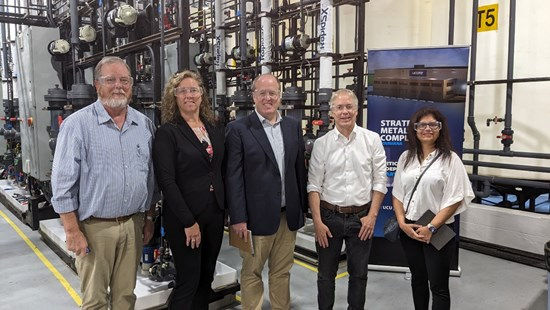
Critical technology metals supply chain innovator Ucore Rare Metals (TSX.V: UCU) (OTCQX: UURAF) is continuing to build supportive financing for its push to build a North American base for rare earth element (“REE”) processing.

Ucore announced earlier this month that it had garnered a $4 million project award from the U.S. Department of Defense to demonstrate the capabilities of its RapidSX(TM) solvent extraction process (https://ibn.fm/k7XZ2), and built on that development with the announcement June 16 of a brokered private placement offering for minimum gross proceeds of $4 million and maximum gross proceeds of $5.35 million (https://ibn.fm/vpoHB).

Forbes noted earlier this year that China controls 36.7 percent of the world’s REE reserves, 63 percent of its mining capacity, and over 90 percent of its refining capacity, including 85 percent of the world’s REE processing and 92 percent of the REE magnet production that supplies technologies ranging from hybrid and electric vehicle motors and cordless tool motors to wind turbine generators, MRI scanners and military uses in Abrams tanks and F-35 jets.

The report noted that the European Union imports 98 percent of its REE supply from China and the United States imports 78 percent of its supply from the Asian nation (https://ibn.fm/TFtWw), underscoring the concerns Western-allied nations have expressed since China began flexing its REE supply muscle with temporary export restrictions and price increases over a decade ago (https://ibn.fm/AltAc).

Ucore’s RapidSX(TM) solvent extraction process is expected to improve on the industry standard SX solvent extraction process used to separate REEs from their host ores, accelerating their production time and lessening the environmental impact of the process. The company has been demonstrating the RapidSX(TM) technology at a plant in Canada and is preparing to begin construction this year on a Louisiana facility where it will have its first commercial-scale application.

Ucore expects to be processing 2,000 metric tons of total rare earth oxides by the end of 2024 and up to 5,000 metric tons by 2026 (https://ibn.fm/SqQnB).

“Having recently participated in the Critical Minerals Institute Summit in Toronto, we are more confident than ever that Ucore’s planned rare earth separation facility in Louisiana will be a critical component of a North American rare earth supply chain,” Ucore Chairman and CEO Pat Ryan stated in the June 16 news release.

The private placement offering will be available to purchase in all the provinces of Canada except Québec, and may also be offered in the United States, providing funding to complete the demonstration commissioning process in Canada and generating additional working capital for the company.

A second REE extraction facility will eventually be built in Canada and Ucore also controls a rare earth mining prospect in Alaska that it intends to eventually develop. The mine prospect holds more than 4.7 million metric tons of indicated rare earth ore — the equivalent of about 63.5 million pounds of collective rare earth metals (https://ibn.fm/2zVF1).

For more information, visit the company’s website at www.Ucore.com.

NOTE TO INVESTORS: The latest news and updates relating to UURAF are available in the company’s newsroom at https://ibn.fm/UURAF

2023 Maine Cannabis Convention Joins MMCM’s HomeGrown TradeShow for Nation-leading Event

The Maine Cannabis Convention, billed as the largest B2B event in the state, will move from Portland to Augusta this year for its seventh annual gathering in a state where sales of recreational cannabis nearly doubled last year.

Since the Maine adult-use market’s first full month of operation in October 2020, the state’s industry saw new records set every month through August 2022, and by year-end the sales figures were still close to that peak (https://ibn.fm/tiarC).

The 2023 Maine Cannabis Convention take place August 12-13th and will continue the series’ tradition of bringing together the region’s best speakers on multiple programming tracks, a congregation of decision-makers and cannabis/hemp business people attendees, and floorspace for exhibitors who display all kinds of products and services, ranging from cultivation to accounting.

The details are still coming together but, if the previous conventions are any indicator, attendees can expect to mingle with hundreds of delegates and about 150 exhibitors.

Businesses interested in exhibition space can register at https://ibn.fm/7mcg9. More than 50 booth spaces have already been reserved, including a spot for last year’s Vape Cartridge NECANN Cup winner HIGHTECH Labs.

The NECANN Cup is the largest cannabis competition in New England and provides an opportunity for innovators to shine, particularly in the crowded marketplace that Maine’s cannabis industry has become.

This year, the convention will work in partnership with the Medical Marijuana Caregivers of Maine (MMCM) to combine the annual event with MMCM’s HomeGrown TradeShow, bringing patients and their caregiver advocates into the mix.

Medical-use cannabis has been allowed in Maine since 1999, with voter-approved dispensary and state registry becoming legal a decade later (https://ibn.fm/2RAdJ). The MMCM was organized in 2010 as a volunteer trade association dedicated to the support and promotion of safe access to medical marijuana, and the MMCM HomeGrown TradeShow is now in its 11th year of scheduled events in Augusta.

Key takeaways:

  • Combining for the first time with the Medical Marijuana Caregivers of Maine’s (MMCM’s) HomeGrown TradeShow in Augusta, Maine, for the largest B2B cannabis industry event in the state
  • Taking place Saturday and Sunday, Aug. 12-13
  • About 150 business exhibitors expected, with more than 50 already registered
  • Attendees include decision-makers and cannabis/hemp business people for those interested in networking
  • Competition for the NECANN Cup in a variety of categories

Behind the scenes:

Since 2014, the New England Cannabis Convention (NECANN) has sponsored events including annual conferences in celebration of hemp, medical marijuana and adult cannabis use, and the organization is widely known as a leading force in the adoption and celebration of cannabis consumption from Maine to Oklahoma as the popularity and legality of the market continues to spread.

For more information about this event and to register, please visit https://ibn.fm/GhEo9.

D-Wave Quantum Inc. (NYSE: QBTS) Supports Governments’ Investment in Near-Term Quantum Applications

  • D-Wave’s technology is geared toward optimization problems commonly faced by the public sector
  • Governments worldwide are engaging with quantum computing to solve public sector problems and build domestic supply chains and workforces

D-Wave Quantum (NYSE: QBTS), a leader in quantum computing systems, software, and services focused on delivering value via practical quantum applications, is helping fuel the adoption of near-term quantum computing solutions against a backdrop of increased government assessment, investment and legislation. As more governments start to consider quantum applications and the use of quantum technologies to solve public sector challenges, D-Wave offers solutions oriented towards addressing optimization problems commonly faced by government agencies.

Countries around the world, including the United States, are prioritizing quantum computing. While they continue their basic research on hardware, they are expanding the focus to include quantum applications and computing technologies that solve public sector problems and build domestic supply chains and workforces. D-Wave is already providing these solutions to its broad portfolio of commercial and government customers, solving problems such as logistics, artificial intelligence, materials sciences, drug discovery, scheduling, fault detection, and financial modeling. Public sector solutions for emergency response, sustainability, supply chain, infrastructure, telecommunications and energy can all benefit from D-Wave’s quantum technology.

Many governments are increasingly investing in national quantum efforts, including Canada, Australia, Germany, France, India, UK, and more, as global spending on quantum is expected to reach $36 billion during 2023 (https://ibn.fm/XYCns). Many of the new or updated quantum strategies that have been announced are focused on near-term quantum application development and deployment to spur commercialization and adoption, including:

  • Australia: New quantum strategies have been released along with previously announced support using quantum computing for transportation network optimization
  • Canada: The industry Committee in the House of Commons recommended creating a quantum sandbox program to support application development and accelerate commercialization
  • EU: Multiple activities are underway in support of quantum and near-term use of the technology within the EU commission and member communities
  • UK: A 10-year quantum strategy has been introduced that explicitly includes quantum annealing in the UK’s SparQ program, and a current call for application development in an 18-month or less timeframe

The United States national quantum initiative is up for reauthorization by September 2023 – with many in Congress pushing for the adoption of near-term application programs. These programs focus on developing and deploying demos, proofs of concepts and pilots within a 24-month or less timeframe. Think tanks and tech policy organizations are calling for the United States government to begin utilizing quantum technology that is available now, including the Center for Data and Innovation and the Hudson Institute’s Quantum Alliance Initiative. Current near-term legislation include:

  • Quantum Sandbox bill
  • Quantum in Practice Act
  • Use of Quantum Computing bill
  • NDAA Pilot Program for Near-Term Applications
  • Wildfire DEMO Act

Ready to support the governmental prioritization of near-term quantum development, D-Wave’s Advantage(TM) quantum computer is commercial-grade and production-ready, featuring more than 5,000 qubits and 15-way qubit connectivity. This provides 2.5x more connections and more than double the number of qubits than the company’s previous generation quantum computer, helping organizations solve some of their most computationally complex problems.

D-Wave is strategically positioned within the quantum industry – already providing solutions for blue-chip commercial customers like Volkswagen, Mastercard, Deloitte, ArcelorMittal, Siemens Healthineers, Unisys, Accenture, BBVA, NEC Corporation, Pattison Food Group Ltd., DENSO, and Lockheed Martin. The company has the focus and track record to provide the platforms necessary to propel governments into the future of quantum.

For more information, visit the company’s website at www.DWaveQuantum.com.

NOTE TO INVESTORS: The latest news and updates relating to QBTS are available in the company’s newsroom at https://ibn.fm/QBTS

Electronic Servitor Publication Network Inc. (XESP) Announces a New Channel Partner, IBN, to Help Provide Additional Growth-Focused Services

  • IBN has been named a new Channel Partner within XESP’s Channel Partner Program
  • The value-add approach gives customers additional growth-focused services from a trusted point of contact
  • XESP and IBN previously announced signing mutual definitive service agreements between the parties, with Channel Partner as a natural progression of the relationship

Electronic Servitor Publication Network (OTCQB: XESP), a market disruptor for B2B companies using cutting-edge data analysis and smart technology, has announced a new Channel Partner with the addition of InvestorBrandNetwork (“IBN”), a multifaceted financial news and publishing company for private and public entities (https://ibn.fm/fw5k4).

The XESP Channel Partner Program allows digital and traditional agencies who provide market-specific content and digital strategies, to offer XESP’s technology and expertise, including the company’s Digital Engagement Engine(TM), as a co-branded service. This value-add approach gives Channel Partner customers additional growth-focused services from a trusted point of contact.

XESP and IBN previously announced the signing of mutual definitive service agreements between the parties, and the addition of the Channel Partner Program is a natural progression in the company’s expansion into a multiple vertical service provider.

“We are excited to partner with an experienced industry leader that has built trust and deep relationships over the last 17 years with both public companies and those looking to go public,” said Peter Hager, CEO of XESP. “Michael McCarthy, IBN’s pioneering CEO, delivers unparalleled value for their clients through continuous innovation and world-class execution in helping companies build their audiences and reach throughout the world.”

Announced in April, XESP’s Channel Partner Program is part of its overall business strategy. It includes providing the company’s managed service, branded as “Growth as a Service”, through its Channel Partners to their customers. The benefit of the program to Channel Partners is the increased capability of driving value for their customers while de-risking the investment in new technologies and staff. The managed service allows immediate scale into any vertical, including regulated markets.

The company’s Digital Engagement Engine(TM) utilizes a combination of automation, unique data management, and a modern workflow built on a microservices architecture, to achieve greater reach and lift for digital content. This technology allows clients to maintain control of their content while dynamically engaging their targeted audiences. The Digital Engagement Engine(TM) isn’t just another marketing tool but a way to develop real connections with target markets to drive growth – representing the future of marketing.

XESP’s laser-focused approach makes customers feel they are being talked to directly. The Digital Engagement Engine(TM) works by:

  • Using cutting-edge data analysis
  • Identifying the narrowest of niches within target markets
  • Creating tailored content to meet exact customer needs
  • Precisely delivering the message to educate and sell at the right moment

According to ReportLinker, the global customer engagement solutions market size is expected to grow from $19.3 billion in 2022 to $32.2 billion by 2027, growing at a CAGR of 10.8% during the forecast period. The growth of the market is driven by the rapid digitalization of enterprises, focusing on streamlining operations and improving customer experience (https://ibn.fm/L6ozu).

XESP focuses on three important digital elements to improve client outcomes – connecting with the audience, relating to the community, and influencing positive customer relationships. Implementing XESP services is effortless for clients and is managed by XESP’s team. The implementation lets clients focus on their brand, product offering, and content creation.

For more information on its “Growth as a Service” offering, visit the company’s website at www.XESPN.com.

NOTE TO INVESTORS: The latest news and updates relating to XESP are available in the company’s newsroom at https://ibn.fm/XESP

Reflex Advanced Materials Corp. (CSE: RFLX) (OTCQB: RFLXF) Prepares to Meet the Fuel Cell Industry’s Rising Demand for Graphite

  • Adoption of fuel cell technology hinges on the availability of high-purity graphite for specific fuel cell components
  • The Ruby Graphite project is the only known combined graphite flake and vein graphite source in the U.S., recent samples assay at 95.8% to 98.4% total carbon
  • RFLXF acquired the Ruby Graphite project in 2022, holds mining rights for 755 hectares with 96 federal lode mining claims
  • Other graphite applications include the use of specialized fire retardants, in high-speed machinery; as a refractory material in certain manufacturing processes; as a crucial component in lithium-ion batteries; and as a moderator in specific types of nuclear reactors

Fuel cells use an oxidation-reduction reaction to convert fuel into electricity, making them critical to electrification initiatives aimed at improving air quality and reducing fossil fuel dependence. The technology is constantly evolving, however its ultimate success hinges on the availability of high-purity graphite for specific components within the fuel cell stack.

Reflex Advanced Materials Corp. (CSE: RFLX) (OTCQB: RFLXF), a strategic minerals company, is actively exploring its Ruby Graphite project and aims to prove the economics of the historically producing mine and eventually position itself as the premier North American supplier of high-purity natural graphite for advanced technological applications. The company focuses on locating and developing economic properties in the strategic metals and advanced materials space, including the ZigZag Lithium Property in the Thunder Bay Mining Division of Ontario, Canada, and the Ruby Graphite Project in Montana.

The Ruby Graphite project produced roughly 2,400 tons of graphite from 1902 to 1948. It’s also the only known combined graphite flake and vein graphite source in the United States, with recent samples assaying at 95.8% to 98.4% total carbon. The company acquired a 100% interest in the property in 2022, and now holds mining rights for 755 hectares with 96 federal lode mining claims.

RFLXF’s initial drilling program includes 3,500 total meters of drilling cored to an average depth of 130 meters. Targets for the drill program were identified using data gathered for the initial 43-101 technical report dated January 31, 2023, and historical data from original mining operations. The company submitted a permit application to the Montana Bureau of Land Management in March 2023 and expects to start drilling this summer.

RFLXF has also engaged with Lone Star Tech Minerals (“LSTM”), a Texas-based graphite and industrial minerals marketing consulting firm, to help advance the project (https://ibn.fm/iIqAn). Under the terms of the agreement, both companies will develop a production plan, marketing strategy, customer database, and technical data sheet.

According to a recent report by Research and Markets, the graphite market is expected to reach $25.70 billion in 2028 at a CAGR of 8.2% between 2021 and 2028 (https://ibn.fm/P4oPS). Besides powering fuel cells, graphite is also used to produce refractory materials for steelmaking, foundries, and glass manufacturing. Other applications include its use as a dry lubricant in high-speed machinery; as a key component in lithium-ion batteries for portable electronic devices, electric vehicles, and renewable energy systems; and as a moderator in some types of nuclear reactors.

Graphite demand is expected to surge as the world shifts to electrification. Reflex Advanced Materials Corp. is preparing to meet that demand by developing the Ruby Graphite Deposit and other strategic economic properties in the strategic metals and advanced materials space.

For more information, visit the company’s website at www.ReflexMaterials.com.

NOTE TO INVESTORS: The latest news and updates relating to RFLXF are available in the company’s newsroom at https://ibn.fm/RFLXF

From Our Blog

The Race to Operate Without GPS Is Creating a New Defense Technology Category

July 2, 2026

Disseminated on behalf of SPARC AI Inc. (CSE: SPAI) (OTCQB: SPAIF) and may include paid advertising. For decades, GPS served as one of the foundational technologies of modern military operations. Navigation, reconnaissance, targeting, and autonomous flight all came to assume constant access to accurate positioning data, and many platforms were built around the expectation that […]

Rotate your device 90° to view site.