


Stocks To Buy Now Blog

Stocks on Radar

D-Wave Quantum Inc. (NYSE: QBTS) Announces Update to Constrained Quadratic Model Hybrid Solver

  • D-Wave introduced algorithmic updates to its Constrained Quadratic Model (“CQM”) solver, delivering increased performance for existing binary problem classes, including offer allocation, portfolio optimization, and satisfiability
  • D-Wave tested 2,045 binary quadratic problems, with the new CQM solver winning 80% of the problems against prior versions
  • D-Wave’s hybrid solvers expand the size and complexity of potential problems customers can solve using classical and quantum computation to find better answers to complex business problems

D-Wave Quantum (NYSE: QBTS), a leader in quantum computing systems, software, and services and the world’s first commercial supplier of quantum computers, recently announced an update to its Constrained Quadratic Model (“CQM”) hybrid solver in its Leap(TM) quantum cloud service. The company introduced algorithmic updates to its CQM solver, delivering increased performance for existing binary problem classes, including offer allocation, portfolio optimization, and satisfiability (https://ibn.fm/1AGIY).

D-Wave’s Advantage(TM) quantum computer is the first and only quantum computer designed for business applications. The platform features a processing architecture with over 5,000 qubits and 15-way connectivity. The Advantage system features 2.5x more connections and more than double the number of qubits than the company’s first-generation quantum computer model.

Optimization problems are everywhere in today’s enterprises, and the current quantum-hybrid technology available may help developers tackle quadratic problems to find better solutions. To provide a benchmark of the performance enhancements made to its updated hybrid solver, D-Wave tested 2,045 binary quadratic problems, with the new CQM solver winning 80% of the problems against prior versions. The full technical report can be found at https://ibn.fm/hzcCJ

D-Wave offers several hybrid solvers, which combine the power of classical and quantum computation to solve customers’ complex business problems. D-Wave’s hybrid solvers are available in the Leap quantum cloud service. Some of these solvers make use of NVIDIA GPUs accessed through cloud infrastructure.

“Our mission at D-Wave is to unlock the power of practical quantum computing for our customers. These most recent updates to our CQM hybrid solver reflect our commitment to building solutions that bring real enterprise applicability and impact today,” said Trevor Lanting, vice president of software, algorithms, and cloud services for D-Wave. “We’re excited by the performance enhancements that we are seeing, and our rapid pace of innovation allows us to expand quantum-hybrid workflows to help solve increasingly complex problems.”

As the only quantum computing company capable of solving real-world business problems today, D-Wave has helped customers build hundreds of practical quantum applications spanning logistics, artificial intelligence, materials sciences, drug discovery, employee scheduling, national defense, and financial modeling (https://ibn.fm/UQ7Jl). Some of the customers that D-Wave works with include Forbes Global 2000 companies and blue-chip industry leaders like Volkswagen, Mastercard, Deloitte, ArcelorMittal, Siemens Healthineers, Unisys, Accenture, BBVA, NEC Corporation, Pattison Food Group Ltd., DENSO and Lockheed Martin.

D-Wave owns one of the industry’s largest quantum computer intellectual property portfolios, including more than 210 issued US patents, and has published more than 100 peer-reviewed papers in leading scientific journals.

For more information, visit the company’s website at www.DWaveQuantum.com.

NOTE TO INVESTORS: The latest news and updates relating to QBTS are available in the company’s newsroom at https://ibn.fm/QBTS

Forward Looking Statements

Certain statements in this press release are forward-looking, as defined in the Private Securities Litigation Reform Act of 1995. These statements involve risks, uncertainties, and other factors that may cause actual results to differ materially from the information expressed or implied by these forward-looking statements and may not be indicative of future results. Forward-looking statements in this press release include, but are not limited to, statements regarding the potential of today’s quantum hybrid technologies to help developers tackle quadratic problems to find better solutions. These forward-looking statements are subject to a number of risks and uncertainties, including, among others, various factors beyond management’s control, including general economic conditions and other risks; the company’s ability to expand its customer base and the customer adoption of the company’s solutions; risks within D-Wave’s industry, including anticipated trends, growth rates, and challenges for companies engaged in the business of quantum computing and the markets in which they operate; the outcome of any legal proceedings that may be instituted against the company; risks related to the performance of its business and the timing of expected business or financial milestones; unanticipated technological or project development challenges, including with respect to the cost and/or timing thereof; the performance of the company’s products; the effects of competition on its business; the risk that the company will need to raise additional capital to execute its business plan, which may not be available on acceptable terms or at all; the risk that the company may never achieve or sustain profitability; the risk that the company is unable to secure or protect its intellectual property; volatility in the price of the company’s securities; the risk that its securities will not maintain the listing on the NYSE; and the numerous other factors set forth in D-Wave’s Annual Report on Form 10-K for its fiscal year ended December 31, 2022, and other filings with the Securities and Exchange Commission. Undue reliance should not be placed on the forward-looking statements in this press release in making an investment decision, which are based on information available to the company on the date hereof. D-Wave undertakes no duty to update this information unless required by law.

Electronic Servitor Publication Network Inc. (XESP) Driving Next Generation of Tech-Enabled Businesses

  • Electronic Servitor Publication Network, a technology-oriented digital engagement and activation company, is pioneering an evolution of digital marketing through its Digital Engagement Engine(TM), for the next generation of technology-enabled businesses
  • Experts hold that sales leaders will need to rethink better ways to meet buyers’ inflated digital expectations
  • As technology advances, companies are poised to move beyond simple automation and assisted selling to true augmented selling, where technology is positioned to play an active role in the design and execution of the sales process
  • XESP is deploying its tech stack to create meaningful connections and drive the evolution of digital marketing

Technology is central to unlocking seller productivity and facilitating high-quality deals. However, according to Gartner, this is only possible when companies embrace technology and its applications as a teammate for sellers rather than merely a tool or a replacement. When looked at from this perspective, and amid a tech revolution that is giving technology more responsibility, new technological systems have the potential to transform the role of the seller, according to Robert Blaisdell, a Senior Director Analyst in Gartner’s Sales Practice (https://ibn.fm/oOIPA).

“A new approach that marries technology advances with the distinctive abilities that human sellers bring to a deal is required to adapt to customers’ changing needs and drive real commercial outcomes,” explains Blaisdell. “Sales leaders will need to rethink how to meet buyers’ inflated digital expectations. Those who don’t risk distancing themselves from buyers and leaving money on the table.”

As technology advances, it is increasingly playing a greater role and becoming fully embedded into operations. As a result, a recent article in Destination CRM notes (https://ibn.fm/8jqXe), companies “can finally move beyond simple automation and assisted selling to true augmented selling, where technology plays an active role in design and execution of the sales process.” Accordingly, sellers can rely on technology as their teammates, enabling them to assign or delegate roles associated with basic customer interactions or lead generations.

Some of the technologies that experts recognize as the top sales priorities in 2023 include content management, generative AI-powered email, digital sales rooms (“DSRs”), customer data platforms, digital engagement platforms, visual collaboration tools, virtual reality (“VR”), no-code workflows, workstream collaboration, conversational intelligence, visual configuration, narrative automation, buyer intent data collection tools, forecasting technology, and ChatGPT.

Amid recognition of the role that these technologies are poised to play in the future of sales and business, technology providers like Electronic Servitor Publication Network (OTCQB: XESP) are emerging to serve the next generation of technology-enabled businesses. XESP, a technology-oriented digital engagement and activation company, is pioneering the next step in the evolution of digital marketing with its Digital Engagement Engine(TM).

“Our Digital Engagement Engine isn’t just another marketing tool. It’s a way to develop real connections with your target market. And it’s the future of marketing,” explains the company. As the future of marketing, the Digital Engagement Engine is built on a robust stack of cutting-edge data analysis tools, smart technologies, and microservices, which, combined, enable it to identify the narrowest of niches within a company’s target market, create content that meets customers’ exact needs, and deliver content at the right moment when customers need it.

The company’s tools (a combination of its unique tech stack and proven processes) provision content, ensuring the message is well understood and is delivered in such a way that maximizes its potential for influence across both targeted audiences and new communities a company would like to engage. The tools also sort metadata, prior to launch, that will create the broadest of interest impacting both direct and indirectly related communities (https://ibn.fm/1sf91).

Upon launch, the tools analyze the initial launch data, autotune themselves, and begin redirecting to increase the reach of the content across online communities through omnichannel publications. Finally, the tech stack and tools loop back to the previously learned data – as well as any new data – enabling them to keep optimizing. In this regard, the tech stack continuously improves, driving better results for clients on a regular basis.

According to Electronic Servitor Publication Network’s case study, the company has already seen incredible results across multiple industries. Businesses within non-trending verticals, for example, are experiencing results that are nine times the industry average, while those within trending verticals are posting results that are seven times the industry standard (https://ibn.fm/kNeML).

In addition to blending several technologies that experts see as the top sales priorities in 2023 – including content management, digital engagement platforms, and more – XESP’s Digital Engagement Engine™ and processes are creating meaningful connections, driving the evolution of digital marketing, and serving the next generation of technology-enabled businesses.

For more information, visit the company’s website at www.XESPN.com.

NOTE TO INVESTORS: The latest news and updates relating to XESP are available in the company’s newsroom at https://ibn.fm/XESP

Prospera Energy Inc. (TSX.V: PEI) (OTC: GXRFF) (FRA: OF6B) On Track for Expansion in 2023 Amid Growing Oil and Gas Market in Canada

  • After a banner year in 2022, Prospera Energy remains poised for rapid growth in 2023; Prospera Energy Inc. recently announced the start of a 10-well horizontal drilling campaign that is intended to capture significant remaining heavy oil reserves
  • The company aims to demonstrate that the coexistence of growth and sustainability is possible; seeks to capitalize on the high-margin potential of its core Canadian properties while steering the oil industry towards greener oil operations and a more sustainable future
  • The company’s high aspirations come amid a burgeoning oil and gas market in Canada, for which 2023 is expected to be one of the pivotal moments

Following its transformational efforts in 2022, Prospera Energy (TSX.V: PEI) (OTC: GXRFF) (FRA: OF6B), a public oil and gas exploration, exploitation and development company focused on Western Canada, appears poised for record growth in 2023. Building on the success from 2022, when the company realized a Net Income of $3.1 million and experienced rapid growth when its revenue grew by a staggering 860% in Q2 2022. Prospera Energy expects significant reductions in production costs through 2024 and sizable increases in daily production. The company is currently exploring strategic acquisition targets to diversify Prospera heavy/light/gas product mix and path to 5,000 BPD over the next 24 months while expanding its reserve base to a billion barrels (https://ibn.fm/mYttq).

The company recently announced the spudding of the first horizontal well of the ten well modular multi-pad infill drill program, which is intended to accelerate production and recovery to capture the significant remaining heavy oil reserves (400 MMBBL). Stemming from a comprehensive geological, seismic, and reservoir management delineation, this ten well program can approximately add new 750 BPD at a low decline to Prospera’s current 900+ BOEPD (https://ibn.fm/WdpH5).

The company’s high aspirations come amid a growing oil and gas market. “The year 2023 may be one of the most pivotal moments in time for Canada’s oil and natural gas industry,” said Lisa Baiton, the president and CEO of The Canadian Association of Petroleum Producers (“CAPP”). CAPP expects oil and natural gas investment in upstream production to beat pre-COVID levels, hitting $29.4 billion in 2023. The total investment forecast is 11% more in additional spending than the previous year, mainly directed towards environmental protection and emission reduction technologies (https://ibn.fm/C5oe0).

Prospera Energy appears firmly committed to growth, but not at the cost of the environment. In an era where environmental sustainability takes center stage, companies across the economy rush to rethink their operations in a bid to curb their impact on the planet – and oil and gas remains no exception. Traditionally entrenched in carbon-intensive practices, the industry has been notorious for contributing to pollution.

However, in a world that seeks to strike a balance between energy needs and environmental sustainability, those times are changing. Although taunted for worsening global warming, the industry is still considered well-positioned to become one of the strongest allies in the fight against the climate crisis, as the sector can help slash greenhouse gas emissions for future generations by leveraging its ample scientific and engineering expertise.

In this race towards a more sustainable future the company is committed to being part of the trailblazing pack that aims to set new benchmarks for more responsible oil production. By employing advanced technologies and innovative practices, the company strives to slash or even potentially eliminate emissions associated with its operations, showcasing its dedication to sustainable energy production (https://ibn.fm/wF5pN).

Leveraging a seasoned leadership team with more than 100 years of combined experience across multiple areas of business operations and growth strategy, Prospera Energy appears poised to show how growth and responsibility can coexist. Aspiring to change the face of the oil and gas industry, criticized for its contribution to global warming, the company seeks to eliminate emissions, minimize environmental impact, and run environmentally sustainable operations while capitalizing on the high-margin potential of its core Canadian properties in Saskatchewan and Alberta.

For more information, visit the company’s website at www.ProsperaEnergy.com.

NOTE TO INVESTORS: The latest news and updates relating to GXRFF are available in the company’s newsroom at https://ibn.fm/GXRFF

The Strategic Brilliance of Acquiring High Times IP, Including Existing Licensing Agreements and Royalty Streams in All-Stock Transaction

Lucy Scientific Beats MindMed and Seelos Therapeutics to the Punch

Lucy Scientific Discovery (NASDAQ: LSDI) (“Lucy” or the “Company), a Nasdaq-listed company with holdings and operations in a variety of psychotropic businesses, just announced the acquisition of the Intellectual Property of High Times, its Licensing Agreements and Royalty Streams in all-stock transaction. This was a brilliant strategic business move.

With first movers in the “Mind Science” space like MindMed (NASDAQ: MNMD) and Seelos Therapeutics (NASDAQ: SEEL) realizing than 80% and 40% year-to-date gains respectively, today’s acquisition by Lucy delivers immediate revenue, an expanded product line, a proven and highly influential platform, and a vast customer database, in one quick strike.

Credibility and Audience Reach

High Times has been an icon in cannabis culture for decades, demonstrating credibility and influence within the market niche. Their media assets reach millions, presenting an ideal platform for educating the public about Lucy’s psychotropic businesses. This large and engaged audience should prove invaluable in Lucy’s pursuit of psychotropic research and associated future product launches.

Regulatory Momentum

High Times has been instrumental in shaping positive public sentiment around cannabis, a feat it achieved through education and advocacy. Its history and experience in navigating complex regulatory landscapes could offer a template for Lucy in overcoming similar challenges. As the shareholders Lucy are well aware, public sentiment and regulatory approval are interconnected. Capitalizing on the media reach and influence of High Times could catalyze a more favorable regulatory environment for Lucy, driving long-term shareholder value through potentially quicker paths to approval in various untapped markets.

Commercial Synergies

High Times has built a robust commercial ecosystem around cannabis culture, ranging from events to merchandise. For Lucy, leveraging these commercial capabilities can diversify revenue streams and create synergistic opportunities. High Times events can serve as platforms for Lucy’s psychotropic products and promotions, as well as networking with medical professionals, thereby not only driving awareness but also potentially increasing the company’s intellectual capital.

Brand Amplification

The acquisition of High Times provides an opportunity to create a unified, robust brand presence in the psychotropic medicine space. The reputation and authority that come with High Times can be funneled to promote responsible use and credible science surrounding psychotropic medical treatments. The result is a stronger, more cohesive brand that enhances investor confidence and attracts further investment, thereby benefiting the shareholders.

Conclusion

For Lucy, the acquisition of High Times Holding Corp’s assets and followers is not merely a value-add; it is a strategic imperative. By providing access to a vast, engaged audience, influencing regulatory outcomes, offering commercial synergies, and amplifying brand authority, the acquisition can generate long-term value for Lucy shareholders.

For more information, visit the company’s website at www.LucyScientific.com.

NOTE TO INVESTORS: The latest news and updates relating to LSDI are available in the company’s newsroom at https://ibn.fm/LSDI

Reunion Gold Corp. (TSX.V: RGD) (OTCQX: RGDFF) Poised to Grow in Country with Exceptional Economic Forecast

  • Guyana president reports country has experienced a threefold increase in its economy since 2020
  • Projections forecast continued average annual growth rate for the country of 25% between 2023 and 2026
  • Within this environment, Reunion Gold is moving its Oko West project forward on the path to development, which could further contribute to the country’s growth

As Guyana reports continued economic growth and recovery, Reunion Gold (TSX.V: RGD) (OTCQX: RGDFF) is strengthening its position as a leading gold explorer in the Guiana Shield.

“Guyana has undergone a remarkable economic transformation, experiencing a threefold increase in its economy since 2020,” reported the Guyana Chronicle, the country’s newspaper (https://ibn.fm/n5LJT). Covering a press conference held by Guyana president Dr. Irfaan Ali, the article noted that “the news of Guyana’s nominal gross domestic product (‘GDP’) surging from $1.1 trillion in 2020 to an impressive $3.1 trillion by the end of 2022 has positioned the nation as the fastest-growing economy in the world.

“The Head of State said that the momentous growth can largely be attributed to the successful commencement of oil production at the Lisa Unity FPSO, marking a new era of prosperity for the country,” the article continued. President Ali’s announcement during the press conference highlighted the significance of this milestone in Guyana’s economic trajectory.

“This extraordinary accomplishment, [Ali] said, comes in the face of a challenging global crisis that has inflicted human costs and exposed vulnerabilities in the global food and energy supply,” the article continued. “While global inflation peaked at 8.9% last year and is projected to remain elevated at 6.1% this year, Guyana has emerged as a beacon of economic strength. President Ali further revealed that Guyana is poised to continue its exceptional growth trajectory in the coming years.”

The article reported that Guyana is forecast to achieve an average annual growth rate of 25% between 2023 and 2026. And the growth isn’t just in oil production. “Guyana’s non-oil growth is estimated to reach an impressive 7.9% this year, building upon the remarkable 11.5% growth achieved in the previous year,” the article stated.

With that strong economic performance as a backdrop, Reunion Gold is positioning itself to leverage the strength of the economy while also contributing to the country’s growth. The company is a leading gold explorer in the Guiana Shield, which is made up of Guyana, Suriname and French Guiana.

“The Guiana Shield remains one of the most prospective locations globally for the discovery of world-class orogenic gold deposits,” the company reports. “Guyana, Suriname [and] French Guiana all contain large greenstone belts, from which we expect many more significant gold discoveries could emerge in the coming years.

“The Guiana Shield is already well-endowed with substantial gold deposits,” the company continued. “So far, at least 15 gold mines and deposits hosting at least 50 million ounces of gold have been recognized in the Guiana Shield. Despite the geological prospectivity of this region, significant gold discoveries remain limited due to a lack of exploration. This is the opportunity that we at Reunion Gold are trying to capture.”

Reunion Gold’s Oko West Project in Guyana comprises a prospecting license with an area of approximately 44 square kilometers and is 100% held by the company through its local subsidiary. Guyana is recognized as a mining-friendly jurisdiction, and in the 2022 Fraser Institute ranking of mining investment attractiveness, the country increased to no. 22 in the world and the top country in South America. The company’s leadership together has accumulated more than 225 years of combined experience in the Guiana Shield, ideally positioning the company to make the most of the country’s growing economic stability.

For more information, visit the company’s website at www.ReunionGold.com.

NOTE TO INVESTORS: The latest news and updates relating to RGDFF are available in the company’s newsroom at https://ibn.fm/RGDFF

NECANN’s New York Cannabis & Hemp Convention Set to Empower the Cannabis Industry

Investors, business executives, researchers, and industry leaders, are invited to attend NECANN’s New York Cannabis & Hemp Convention to be held in Albany, New York from September 29 – 30, 2023. The highly anticipated event will focus on the latest trends in the cannabis and hemp industry. The convention serves as a unique platform to connect with industry leaders and explores the limitless possibilities within the cannabis and hemp sectors.

Featuring thought-provoking exhibits and engaging sessions, the New York Cannabis & Hemp Convention is designed to create a lasting impact on the participants. The immersive atmosphere will encourage attendees to share their experiences and gain valuable insights. As a perfect blend of opportunity, passion, and creativity, the two-day event will feature leading brands from different parts of the cannabis and hemp industries. Attendees will get an opportunity to explore a wide range of products.

Shaping the Cannabis and Hemp Industries

The main highlight of the convention is knowledge sharing. Keynote speakers and industry experts will take insightful seminars to discuss the latest trends and innovations in the industry. The thought-provoking panel discussions will provide a glimpse into the latest innovations in the industry. Attendees will get an opportunity to learn about industry trends, cannabis regulations, medical innovations, and investment opportunities.

The New York Cannabis & Hemp Convention will showcase the transformative potential of hemp across different industries, including food, textiles, construction, and beverages. It will enable participants to foster a collaborative environment that reveals innovative ideas and the latest advancements in the hemp industry. Attendees will get a golden opportunity to share their experiences, challenges, and stories, while ensuring an equitable cannabis landscape.

To learn more, please visit https://ibn.fm/5fIEd.

First Tellurium Corp. (CSE: FTEL) (OTCQB: FSTTF) CEO Discusses Metal-Rich Properties, Potential in Recent Podcast

  • Tellurium is listed by the United States and Canadian governments as a critical metal
  • “We have an interesting critical metal that is going to be much of demand in the future as well as high-grade precious metals,” states FSTTF CEO
  • The company’s two properties — Deer Horn Project in British Columbia and Klondike tellurium-gold property in Colorado — anchor a diversified search for metals

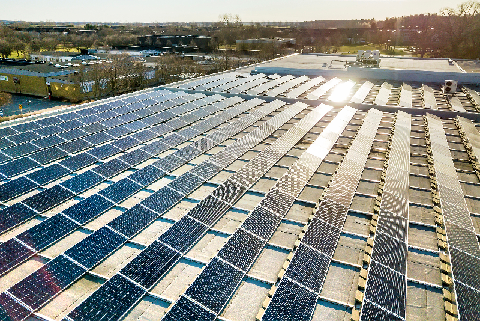
Tellurium is gaining recognition in a world increasingly focused on renewable sources of energy. Listed on both the U.S. (https://ibn.fm/bF1X8) and Canada (https://ibn.fm/jfQXH) list of critical metals, tellurium is a key component of solar panels. First Tellurium’s (CSE: FTEL) (OTCQB: FSTTF) president and CEO Tyrone Docherty was recently featured as a guest on the Bell2Bell podcast, where he talked about the company and its key position in the growing tellurium space.

“First Tellurium has a wonderful, high-grade gold and silver property in Canada, but it comes with this unique mineral, tellurium, which is listed by both the United States and Canadian governments as critical,” Docherty explained as he talked with Bell2Bell host Stuart Smith. “Tellurium has come into the fore over the last couple of decades because it is used in solar panels by U.S. corporation First Solar, which uses a mixture of cadmium and tellurium, as opposed to different solar panels coming out of China. Tellurium is very important there, and it’s a very rare metal.”

Docherty has worked in the minerals market for more than three decades. After starting Quinto Mining Inc. at $4 million, he eventually sold it for $175 million. He took shares in the buyout company, Consolidated Thompson Iron Mines, and ended up owning approximately 21% of that company. When Consolidated sold for $4.9 billion, Docherty gained an enterprise value of about $1 billion.

Docherty planned on retiring after his Quinto days, but he “put on the work boots again” with First Tellurium. As the largest shareholder along with his wife, Docherty notes that “I build companies sort of . . . like the movie, ‘Field of Dreams.’ You know, if you build something properly, people will come with big checks to buy you out, and that’s what I see happening here. We have an interesting critical metal that is going to be much of demand in the future as well as high-grade precious metals to go along with it.”

In addition, Docherty noted, the company’s polymetallic Deer Horn property looks as if it contains the “greenest of all minerals” — copper — which the company plans to start exploring soon. “We really are blessed to have a tremendous property and, to top that off, we’ve also got the highest-grade tellurium property in North America in a property in Colorado that used to be owned by First Solar. So we’re going to be looking at that after, so when it comes to solar potential and tellurium potential, we’re the only ones in town, so to speak.”

In his remarks, Docherty provided a brief overview of the company’s recent milestones, including uplisting to the OTC QB and purchasing a brand-new drill from a group in Alaska. “[The company] insisted that for payment they did not want cash, they only wanted shares of our company,” Docherty explained, “because one of their business associates walked our property in October and saw the copper [potential] for himself and apparently phoned them and said, ‘I haven’t done this for 16 years since I’ve worked with you guys, but you’ve got to buy shares in this junior company.’”

The Bell2Bell podcast delivers informative updates and exclusive interviews with executives operating in fast-moving industries. The complete Bell2Bell interview with Docherty can be heard here.

First Tellurium is committed to generating revenue and value by exploring responsibly and leveraging diverse partnerships. The company’s polymetallic (tellurium, gold, silver, copper, tungsten) Deer Horn Project in British Columbia and Klondike tellurium-gold property in Colorado anchor a diversified search for metals, working in alliance with indigenous peoples, NGOs, governments and leading metals buyers.

For more information, visit the company’s website at www.FirstTellurium.com.

NOTE TO INVESTORS: The latest news and updates relating to FSTTF are available in the company’s newsroom at https://ibn.fm/FSTTF

Genprex Inc. (NASDAQ: GNPX) Obtains New License for Novel Diabetes Gene Therapy Pipeline

  • U.S.-based gene therapy developer Genprex, Inc. is developing new therapies for fighting cancer tumors and diabetes
  • The company’s gene therapies for battling types 1 and 2 diabetes use a simple endoscopic procedure to introduce select insulin-boosting genes directly to the pancreas to combat insulin decline factors in the body
  • The company is working with research collaborators at the University of Pittsburgh (Pitt) and recently announced a new license agreement in relation to a gene therapy for both Type 1 and Type 2 diabetes
  • The company’s novel infusion process using related gene therapy has shown statistically significant results in preclinical testing and Genprex anticipates a pending Phase I trial following the generation of sufficient preclinical data

Clinical-stage cancer and diabetes gene therapy developer Genprex (NASDAQ: GNPX) continues to expand its intellectual property portfolio for the company’s diabetes gene therapy program, recently announcing that it has entered into an exclusive license agreement related to a particular gene therapy for both Type 1 and Type 2 diabetes.

Specifically, the announcement involves a worldwide exclusive license to a patent application and related technology, and a worldwide non-exclusive license to use certain related know-how using the genes of the Pdx1 and MafA transcription factors controlled by a MafB promoter, as developed by the University of Pittsburgh (Pitt).

Genprex is developing technologies to administer disease-fighting genes that will provide new therapies in the fight against cancer and diabetes for large patient populations. In regard to the company’s diabetes approach, the Pdx1 and MafA genes are delivered directly to the pancreas through a novel infusion process (gene therapy candidates GPX-002 and GPX-003).

GPX-002 seeks a solution for type 1 diabetes, which most often appears in childhood or teen years and has no cure. In most cases, the body’s own immune system destroys the insulin-producing (islet) cells in the pancreas for some reason, slowing or stopping the production of vital sugar-regulating hormones (https://ibn.fm/14AW4).

GPX-002 changes alpha cells in the pancreas into functional beta-like cells, which can produce insulin but may be distinct enough from beta cells to help them avoid being destroyed by the body’s immune system. Preclinical testing in mouse models and subsequently in non-human primates has produced statistically significant results to this effect.

GPX-003 seeks a solution for type 2 diabetes, which is more common in adults but similarly involves insufficient quantities of the sugar-regulating insulin hormone, although not as a result of attacks by the body’s immune system. Instead, muscle, fat and liver cells simply become resistant to insulin, and the pancreas fails to produce enough insulin to regulate sugars.

GPX-003 also uses a novel infusion process to deliver Pdx1 and MafA genes directly to the pancreas, which are expected to work by rejuvenating diminished beta cells to increase insulin expression. A Phase I clinical trial in diabetic patients is pending, following the generation of sufficient preclinical data (https://ibn.fm/1nO8Z).

“We are continuing to build a fortress of protection and a powerful intellectual property portfolio for our diabetes gene therapy program,” Genprex Chairman, President, and Chief Executive Officer Rodney Varner stated in the company’s news release about the new Pitt license (https://ibn.fm/mFZqN). “The addition of this license to MafB promoter technology expands and strengthens the potential for this novel, gene therapy to treat Type 1 and Type 2 diabetes.”

The company’s CMO, Mark Berger, MD, added, “What is exciting about this latest licensed technology is the early data suggests greater potency when combined with other previously licensed technologies and may be a particularly significant step forward in our construct optimization.”

For more information, visit the company’s website at www.Genprex.com.

NOTE TO INVESTORS: The latest news and updates relating to GNPX are available in the company’s newsroom at http://ibn.fm/GNPX

As REE Miners Face Impediments to Refining Independence, Ucore Rare Metals Inc. (TSX.V: UCU) (OTCQX: UURAF) Develops Supply Chain Technology Based in North America

  • Ucore Rare Metals Inc. is demonstrating the rare earth feedstock refining capabilities of its proprietary RapidSX(TM) processing technology at an Ontario facility while preparing to build a commercial plant in Louisiana, developing a North America-based supply chain for critical tech metals
  • Rare earth element (“REE”) processing is currently almost exclusively controlled worldwide by the People’s Republic of China, and governments as well as industry players are searching for solutions to develop rare earth sourcing not reliant on Chinese industry and its government’s policies
  • Companies that have been involved in mining REEs have thus far encountered significant impediments to their efforts to refine the metals independent of China’s globe-dominating REE industries
  • RapidSX is being developed as an advantageous alternative to the industry standard SX process for rare earth refining, expecting to show less environmental impact, faster production, and fewer resource needs, as well as independence from China’s supply chain

A recent Reuters report on the challenges facing rare earth (“REE”) processing companies outside of China underscores the potential market opportunity awaiting critical technology metals supply chain innovator Ucore Rare Metals (TSX.V: UCU) (OTCQX: UURAF), as Ucore works to bring its proprietary North America-based REE processing technology online for commercial use.

Ucore is using a unique facility in Ontario, Canada to demonstrate the capability of its RapidSX(TM) solvent extraction process to bring REEs and other critical technology metals to market and do so in an environmentally sound way.

The company has acquired property in Louisiana, United States where it intends to begin construction on a commercial-scalable REE processing plant using RapidSX(TM) later this year.

The Reuters report (https://ibn.fm/aukNP) notes that economies around the world have been struggling to refine their own rare earths in order to “break China’s stranglehold on the key group of 17 metals needed for the clean energy transition.”

It highlights the frustrated efforts of two companies — MP Materials and Lynas — to take REEs they’ve mined and turn them into material for making magnets that are used across the globe in economically sweeping products such as Apple’s iPhone, Tesla’s Model 3 electric vehicle, and Lockheed Martin’s F-35 fighter jet.

The People’s Republic of China effectively controls the supply chain for REEs and other tech metals thanks to strategic buildup of its industries and pricing of its output over the past few decades, leading to estimates that the country is refining 89 percent of the world’s neodymium and praseodymium, which are key metals for EV magnets, and 99 percent of dysprosium, which is used for retaining magnetization at high temperatures, Reuters notes.

The European Union imports 98 percent of its REE supply from China, while the United States imports 78 percent of its supply from the Asian nation (https://ibn.fm/yyvJG).

Other companies each encountered distinct impediments to their efforts to develop REE sourcing that is not reliant on Chinese industry.  “The rare earths refining process can be very finicky,” University of Arizona mining and geological engineering department director Kray Luxbacker told Reuters. “There are just so many complex steps.”

Ucore is excited about its prospects in putting RapidSX(TM) to work. The company’s demonstration plant in Ontario is designed to provide a direct comparison between the RapidSX(TM) output and the output of the conventional SX process used by China and all other processors in the industry.

“Independent testing has shown that the innovative column-based RapidSX platform can separate rare earths nearly 10 times faster within a footprint that is about one-third the size required for the mixer-settler units used for traditional SX separation,” Alaska’s Metal Tech News reported earlier this year (https://ibn.fm/weW6R).

Ucore is also working with the U.S. Department of Defense (“DOD”) to demonstrate the potential of Rapid SX(TM), utilizing a $4 million grant from the federal government.

For more information, visit the company’s website at www.Ucore.com.

NOTE TO INVESTORS: The latest news and updates relating to UURAF are available in the company’s newsroom at https://ibn.fm/UURAF

SuperCom Ltd. (NASDAQ: SPCB) Helping Governments Improve Public Safety, Reduce Recidivism Rates through Suite of Proven Products Focused on Effectiveness of Home Confinement with Electronic Monitoring

  • SuperCom provides offender monitoring products and solutions under the best-of-breed PureSecurity Electronic Monitoring (“EM”) Suite
  • The PureSecurity EM Suite includes the PureOne ankle bracelet, PureTag ankle bracelet, PureCom base station, PureTrack smartphone, PureProtect mobile phone application, PureBeacon radiofrequency (“RF”) device, and the PureMonitor cloud-based software
  • A growing body of research supports home confinement with EM as an effective and appropriate alternative to imprisonment for lower-risk offenders
  • Research shows that people assigned to home confinement with EM have similar or better outcomes than those who serve time in prison, as measured by future criminality
  • By providing EM solutions, SuperCom is helping governments reduce overcrowding in prisons, lower recidivism, and improve public safety

When the U.S. federal government decided to implement home confinement under the Coronavirus Aid, Relief, and Economic Security (“CARES”) Act, it considered, among others, the ability of home supervision and EM to enforce many of the restrictions and safeguards of a prison cell. The decision followed the March 2020 signing into law of the CARES Act, which allowed the federal Bureau of Prisons (“BOP”) to place individuals into home confinement during the official emergency period, which began January 31, 2020, and ended May 11 this year (https://ibn.fm/uppB0).

As of May 27, 2023, the BOP had placed 13,204 individuals into home confinement, with only 521 of those people being returned to secured custody. Of these, 296 were returned due to alcohol or drug use, 113 for technical violations, 90 for failing to remain at a designated location, and 22 for new criminal conduct. The early results of home confinement under the CARES Act are strong, according to a recent article in Niskanen Center (https://ibn.fm/B11b1).

These results contribute to a global body of research evidence that supports the thesis that home confinement is an effective and appropriate alternative to imprisonment for lower-risk offenders. Drawn from studies conducted in the U.S., Norway, Argentina, Australia, Germany, England and Wales, and France, the research evidence, the article says, shows that “people assigned to home confinement with electronic monitoring – either instead of prison or as a condition of release – have, at worst, similar outcomes to those who serve time in prison and, at best, significantly better outcomes, as measured by future criminality.” The article also points out that researchers ascribe substantial cost savings to home confinement.

“Finally, evidence overwhelmingly supports the idea that certainty of apprehension is the most important factor in criminal deterrence, and electronic monitoring substantially increases the probability of capture for any given offense,” the article continues. “Research has shown that offenders on monitoring are aware that authorities are tracking their location, and are aware that they are very likely to be caught should they commit a crime.”

Recognizing the effectiveness of EM in lowering recidivism rates and reducing prison overcrowding, governments are turning to companies such as SuperCom (NASDAQ: SPCB), a global secure solutions integrator and technology provider for governments and consumer-facing organizations worldwide.

SuperCom provides offender monitoring products and solutions under the best-of-breed PureSecurity EM Suite, which includes the PureOne all-in-one GPS tracking ankle bracelet, PureTag ankle bracelet, PureCom base station, PureTrack smartphone, PureProtect mobile phone application, PureBeacon radiofrequency (“RF”) device, and the PureMonitor software. The company combines two or more of these products to provide individual services such as GPS monitoring, home detention (house arrest) enforcement and monitoring, inmate monitoring, and domestic violence monitoring.

For instance, to provide its house arrest solution, the company pairs PureTag, a slim, lightweight, waterproof, and dustproof ankle bracelet with advanced tampering detection, with PureCom, a base station that communicates over LTE, Wi-Fi, and landline connectivity. The company then provides the PureMonitor software, which is used by law enforcement officers to manage these products and monitor offenders. The house arrest ecosystem of products enforces scheduled and spontaneous biometric authentication and minimizes the need for home visits (https://ibn.fm/WvhXj).

Similarly, SuperCom’s GPS Offender Tracking combines the PureTag bracelet with the PureTrack smartphone location capabilities and PureBeacon Bluetooth connectivity (https://ibn.fm/x7qbq), while the domestic violence monitoring solution pairs the PureTag bracelet with the PureProtect app and PureMonitor software (https://ibn.fm/zvT3E).

The company’s PureSecurity EM Suite has attracted a host of countries interested in improving public safety while reducing prison overcrowding and recidivism rates. Earlier this year, SuperCom announced it had launched a $3.6 million project with the national government of Finland to deploy SuperCom’s PureSecurity EM suite (https://ibn.fm/0sdWP). Shortly thereafter, the company announced that, together with its local partner, it had received a second order from Romania’s Ministry of Interior to deploy its PureSecurity EM Suite following successful completion of the first phase (https://ibn.fm/R2av0).

“The growing number of countries opting for advanced EM solutions highlights the increasing need for exceptional technology in this industry. We take pride in the fact that our innovative and proven technology is chosen repeatedly, allowing us to continue revolutionizing the EM industry as we enter new European countries,” commented SuperCom President and CEO Ordan Trabelsi in a news release announcing the project with the government of Finland.

With its growing backlog of orders and projects, SuperCom continues to solidify its position as a leader in the electronic monitoring market and a trusted partner to governments worldwide, according to Ordan. The company aims to continue providing its innovative and proven technology and services to help governments improve public safety while lowering recidivism, a result supported by a growing body of research evidence.

For more information, visit the company’s website at www.SuperCom.com.

NOTE TO INVESTORS: The latest news and updates relating to SPCB are available in the company’s newsroom at http://ibn.fm/SPCB

From Our Blog

SPARC AI Inc. (CSE: SPAI) (OTCQB: SPAIF) Advances Spatial Intelligence with Next-Generation Target Acquisition Technology

January 7, 2026

Disseminated on behalf of SPARC AI Inc. (CSE: SPAI) (OTCQB: SPAIF) and may include paid advertising. SPARC AI (CSE: SPAI) (OTCQB: SPAIF) is an emerging engineering and software company primarily focused on finding solutions to some of the most difficult challenges in modern sensing and autonomy: accurately determining the location of distant objects in real-time. […]

Rotate your device 90° to view site.